
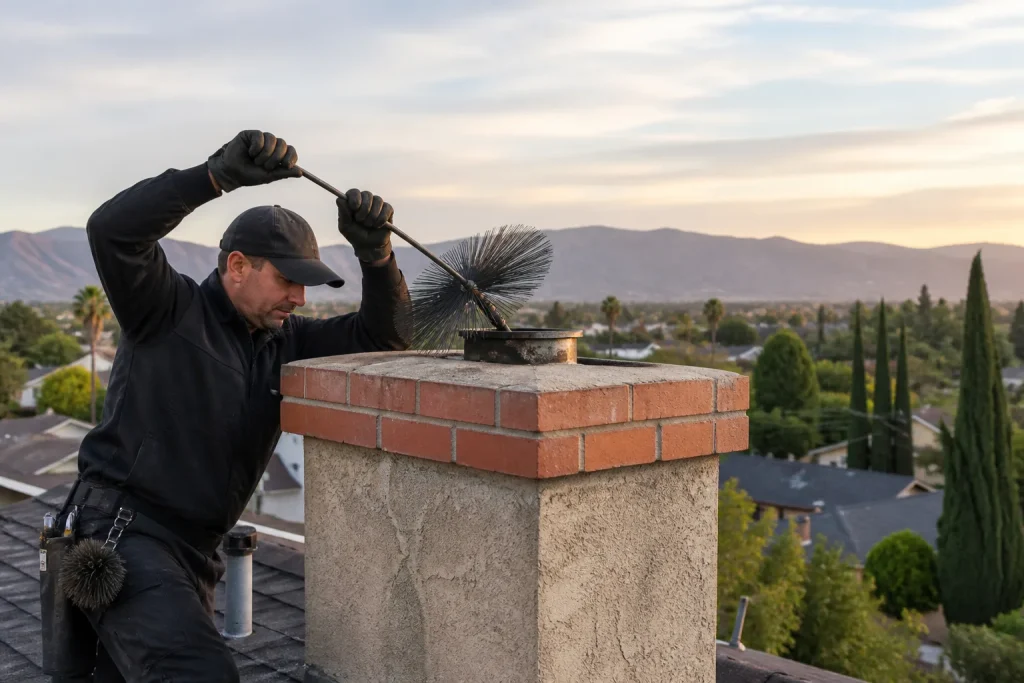
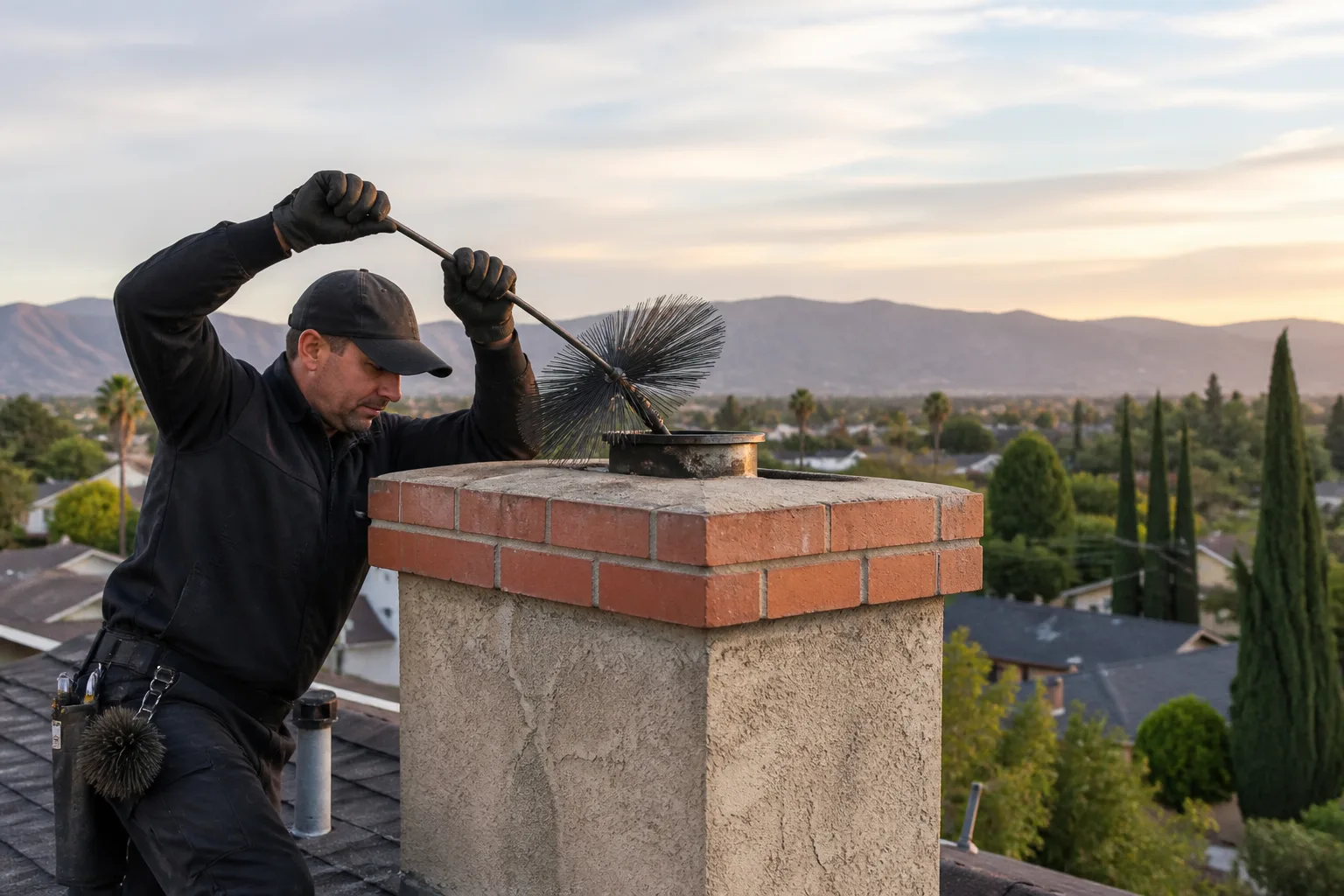
DuraFlex Chimney Sweep in Reseda: A Homeowner’s Guide
When a chimney contractor says they’ll reline your flue, the material they install is the entire ballgame. The difference between a DuraFlex liner and a generic imported flex liner isn’t brand loyalty; it’s wall thickness, alloy grade, and whether the thing will still be watertight when your kid graduates high school. In Reseda, where we’ve opened up hundreds of masonry chimneys built between the 1940s and 1970s, what goes inside that old brick matters more than almost anything else. Here’s what DuraFlex actually is, why it gets specified, and how to know if you’re getting the real product.
What Is a DuraFlex Liner, and Why Does the Material Matter?
A chimney liner is the tube inside your flue that contains heat, combustion gases, and creosote. Your original masonry chimney was likely built with clay tile sections stacked one on top of another. Clay tile works until it doesn’t. It cracks under the thermal shock of repeated heating and cooling cycles. Once cracked, those tiles let heat and gases reach the brick and mortar around them, which is precisely how chimney fires propagate into house fires.
DuraFlex is a flexible stainless steel liner system. The key word is flexible. Unlike rigid stainless sections that must be fitted in straight runs or broken up with elbows, DuraFlex is a continuous corrugated tube that can follow the natural offsets and bends of an older flue. This matters in Reseda because a lot of the masonry chimneys here were built before modern fireplace codes standardized flue dimensions. Tile sections misalign over decades. Mortar joints erode. The flue is rarely a perfect straight shot. A flexible liner threads through that irregular passage as one unbroken piece, eliminating the joints and seams where rigid systems leak.
The corrugated profile also handles thermal expansion differently than rigid pipe. When a liner heats up, it expands. When the fire dies, it contracts. Rigid systems transmit that stress to connection points, gaskets, and support brackets. A continuous corrugated flex liner absorbs expansion along its entire length. The metal flexes thousands of times instead of concentrating force at a joint. That’s the mechanical argument for DuraFlex, and it’s the one most homeowners never hear.
Why the UL Listing Matters for Your Home and Your Insurance
There’s a difference between a stainless tube that fits and a stainless tube that’s been tested and listed for the specific fuel and appliance you use. DuraFlex carries a UL listing for specific configurations: wood-burning fireplaces, gas appliances, oil furnaces, and certain zero-clearance setups. Each rating covers a defined temperature range and clearances to combustibles.
Why does a testing standard from an independent lab matter to you? Because if a chimney fire happens and the investigation finds an unlisted or improperly sized liner, your insurance claim gets harder. The adjuster asks who installed what, and whether the component was rated for that application. A generic flex liner that cost a few hundred dollars less at a bargain supplier may not carry any listing at all. It’s a stainless tube in name only. We’ve pulled unlisted liners out of Reseda homes where the homeowner paid for a “relining” and got what was effectively stovepipe wrapped in a sticker.
The liner has to match the appliance too. A liner rated for a gas fireplace won’t necessarily handle the creosote and particulate load of a wood burner. If you’re burning wood, the liner needs to be rated for solid fuel at the temperatures wood fires reach. This is not a case where bigger always means safer; it’s a case where the listing has to correspond to how you actually use the chimney. The right liner for your flue, installed correctly, means the product choice was made because of what’s burning below it.
How to Verify the Diameter Is Correct for Your Appliance
This is where we see Reseda homeowners get taken. A contractor quotes a reline, names a liner diameter, and the customer has no way to check if that number came from an appliance manual or from whatever pipe was left in the truck.
The manufacturer of your fireplace, stove, or furnace publishes a minimum and maximum flue diameter for the appliance’s BTU output. An oversized liner lets flue gases cool too much as they rise, which slows draft and encourages creosote buildup in wood systems. An undersized liner constricts flow and can force combustion gases back into the living space. The correct diameter is a calculated match, not a guess.
Ask the contractor to show you where the diameter comes from. It should come from the appliance manual or the appliance manufacturer’s listing document. If they can’t name the appliance’s BTU rating and show how the liner size follows from it, that’s a red flag. The same applies to liner length. A liner cut short of the chimney crown, or one that stops before the appliance collar, isn’t a minor trim issue; it’s an incomplete install.
We specify liner diameter from the equipment tags on the appliance itself. On a reline job in Reseda north of Saticoy just last month, the existing liner was six inches inside a fireplace rated for an eight-inch flue. The homeowner said the fireplace had been “fine for years.” The firebox was fine; the combustion gases were not. The draft was sluggish, smoke spilled on windy days, and the glazed creosote at the first bend told us the liner had been condensing woodgas for a long time. Diagnosed and matched, not guessed.
Substitution Red Flags: How to Spot a Low-Grade Liner Being Passed Off as DuraFlex
We’re not going to say every contractor who quotes low is cutting corners. But when a liner quote comes in significantly below other bids focused on professional-grade materials, one of the following is usually true.
First, wall thickness. DuraFlex is manufactured from a specific grade of stainless steel with a .005-inch thickness in the flex wall for most sizes, with alloy properties designed for flue gas exposure. Cheap flex liners often use a thinner gauge or a lower chromium alloy that corrodes under acidic flue condensate. Ask for the alloy specification, not just “stainless steel.” Stainless steel is a category, not a material grade.
Second, component compatibility. A complete reline isn’t just the flex tube. It includes the top plate, rain cap, appliance connector, and sometimes a tee body for cleanout access. When mixed brands get assembled on the fly, the components don’t always seat correctly. DuraFlex systems are designed so the liner, connector, and termination components match as one system. We draw components from known suppliers like Copperfield and Olympia Chimney so that a cap or connector from the DuraFlex system goes with the DuraFlex liner, not a generic cap that happens to fit the top plate.
Third, the installer’s ability to describe the failure mode. A contractor who can explain why the old liner failed, and how the new one prevents that failure, is working from material knowledge. A contractor who says “new liner solves everything” without mentioning why the old one failed is guessing. If they won’t show you the old liner when it comes out, ask why.
What Reseda’s Older Masonry Chimneys Specifically Benefit From
Reseda dates from the post-war building boom, with a heavy concentration of single-story ranch homes built between 1948 and the mid-1960s. Those chimneys are now seventy-plus years old. The brick is often soft by Southern California standards because the mortar was mixed for a mild climate. The clay tile liners in those chimneys are typically the original units, and in this neighborhood we regularly see tile separated at the first offset above the smoke chamber, which is exactly where the flue changes direction and thermal stress concentrates.
This is where flexible liner systems earn their cost. The original flue isn’t straight anymore, even if it was built that way. Settlement, seismic movement (Reseda sits near the Northridge fault system), and decades of thermal cycling have all shifted things. Rigid reline systems fight that. Flexible liners move with it. A DuraFlex liner can follow the actual path of the old flue and bridge the discontinuities where tile has separated.
HeatShield resurfacing is another relevant product here. For chimneys where the original tile is mostly intact but the mortar joints and minor tile surface breaks have become vulnerable, HeatShield is a cerfied ceramic resurfacing product that coats the existing flue rather than replacing it. It’s a material-specific answer, different from a full DuraFlex reline, and if you’re in an older Reseda home where a full reline was quoted, it’s worth asking whether the flue damage could be addressed with resurfacing. The right answer depends on how much of the original structure is sound. We explain what we find, and if the flue can be safely resurfaced rather than fully relined, we’ll tell you that too.
When to Call a Pro, and What a Reline Should Cost in Reseda
If your chimney has a clay tile liner that’s cracked, separated, or missing sections, this is not a repair to watch from across the room. A damaged liner is a fire pathway, full stop. Call a chimney specialist. If you’d rather not deal with any of this yourself, call (866) 562-0968.
In Reseda, a full stainless flex reline with a professional-grade system typically runs from $2,200 to $3,800 depending on flue height, accessibility, and the specific appliance connector configuration. HeatShield resurfacing tends to run lower, often $1,200 to $2,400, because it restores the existing structure rather than replacing it. These are local ranges, not national averages, and they assume a single flue on a standard single-story Reseda home. Multi-story homes, steep roof pitches, and complex offsets push the number higher. If you’re comparing bids, the material should be named on the quote: “DuraFlex stainless flex liner, [diameter] x [length]” with the UL listing referenced. A quote that just says “chimney reline” without materials detail is a quote you can’t evaluate, which means a quote you shouldn’t accept.
Related services in Reseda: if the chimney itself needs repair before a reline makes sense, see our Chimney Repair in Reseda page for what we see and how we fix it. A clean flue before a reline is also non-negotiable; see Chimney Sweep in Reseda. And if you’re also dealing with a dryer vent that hasn’t been cleaned in years, that’s the other venting fire hazard in your house; we handle it too. See Dryer Vent Cleaning in Reseda.
The Bottom Line
A chimney reline is a material purchase, not just a labor purchase. DuraFlex flexible stainless liners work in older Reseda flues because they’re continuous, mechanically tolerant of thermal expansion, and UL listed for the fuels they carry. The reason to know the brand isn’t to be brand-conscious; it’s to avoid paying for a reline that acts like a patch. When a contractor recommends a liner, ask for the diameter logic, the alloy spec, and the UL listing. When we install DuraFlex in Reseda, we show the old coming out and explain what the new one does. If you’re in Reseda and need a chimney assessed, relined, or swept, Chimney Sweep Reseda offers free estimates. Call (866) 562-0968.
Frequently Asked Questions
In Reseda, expect $2,200 to $3,800 for a full professional-grade flex reline on a standard single-story home, depending on flue height and appliance configuration. HeatShield resurfacing runs $1,200 to $2,400 when the original tile is mostly sound. Get a quote that names the liner brand, diameter, and UL listing. Call (866) 562-0968 for an exact quote on your Reseda chimney.
If the original clay tile has minor surface damage and intact joints, HeatShield resurfacing can restore it without a full reline. If tiles are separated, missing, or the flue has shifted, a flexible DuraFlex liner is the permanent fix. A chimney professional in Reseda should show you the damage before recommending either one. We explain what we find, with photos.
A correctly sized and correctly installed DuraFlex liner in a properly maintained chimney will last twenty years or more. The things that shorten its life are wrong diameter, use with an appliance it wasn’t listed for, and moisture entering through a failed cap. Annual sweeping and a good top cap protect the investment.
We strongly recommend against it. A liner installation involves working at roof height, sizing from appliance specs, and connecting components under UL-listed conditions. The listing matters for insurance and for fire safety. If you’re in Reseda, a professional reline costs less than a failed DIY install does. Call (866) 562-0968 for an assessment.
Written by the team at Chimney Sweep Reseda, serving Reseda since 2012.
Need Chimney Cleaning Help?
Call Chimney Sweep Reseda - licensed & insured, with free written estimates in Reseda.
(866) 562-0968